Join the movement and participate on Uniswap.
Participate

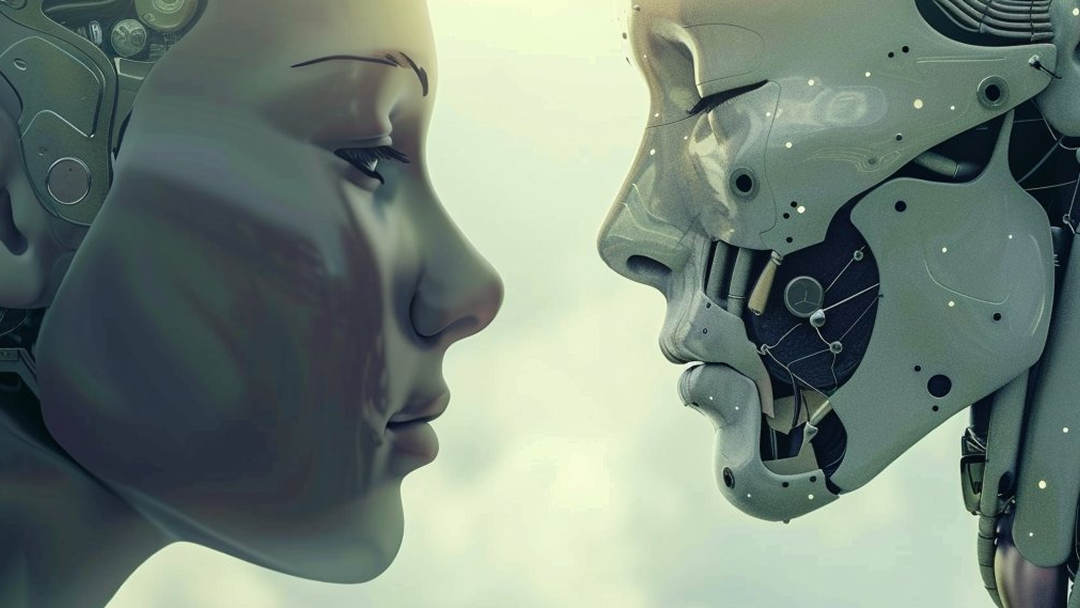
The world is becoming increasingly cognitively demanding, and although we are getting smarter we are not keeping up.
Roughly a quarter of the workforce has an IQ under 90, and the amount of jobs available for these workers is rapidly decreasing.
@jordanbpeterson has been banging this drum for many years, and for good reason.
With an IQ under 90 you start struggling with multi-step instructions, and you learn more slowly. Having a low IQ does not stop you from being an excellent worker and colleague, but it will often require extra effort from the employer to help you get started.
With the automation of factory and logistics jobs, retail is one of the last places for low-skilled workers to go, but they are struggling to find job satisfaction and dignity at work.
Retail is a challenging dynamic environment, and running a store well requires quick thinking and initiative.
Workers with low capacity or motivation for initiative benefit from supervision and guidance - but also find themselves wasting a lot of their time without meaningful tasks.
"If you have time to lean, you have time to clean" is not only a perfect way of alienating retail workers with no equity in your business, but it also does little to help workers with low initiative.
But retail employers are hurting too! The retail sector is struggling with 50-85% annual staff turnover globally due to a combination of low job satisfaction, poor compensation and seasonal demand.
Stores are getting larger and more complex. It's not uncommon to have over ten thousand different products in the store, and hardware that requires training.
@Walmart alone spends over 100 million dollars on first day salaries every year, by my estimate.
I predict that we will see AI enter the workforce in three meaningful chapters. While these will overlap, I think it is helpful to consider them as three distinct eras:
The Hybrid Era: In the hybrid age of human-AI interaction, humans carry the necessary sensors and manipulate the physical world under the supervision of wearable AI.
While @lilich is right that spatial computing may be the eyes and ears of AI, humans are still the best available hands and legs! The retail and warehouse automation market is estimated to grow to over 100bn over the next few years.
The Robotic Era: Eventually, robotic agents capable of independent movement and manipulation of the physical world will use a mix of their own sensors and the sensors of their peers to navigate the world.
A decentralized machine perception network like the real world web by @auki will allow them to collaboratively perceive and understand their physical environment. The market for just for humanoid form factor robots is estimated to reach over 200bn by 2032.
The Transhuman Era: Neural interfaces, exoskeletons, body modifications and nootropics radically expand the human domain and humanity’s capacity to thrive in extreme environments.
Human communication becomes intercognitive, and AI is an extension of the human mind and civilization.
Building in the hybrid era
While @elonmusk and @adcock_brett are making admirable steps with humanoid robotics, there are both practical, economical and ethical considerations that favor making simple wearable AI hardware for the hybrid era:
It is a lot easier to make an AI wearable that assists retail workers than it is to replace them with a robot.
It is also easier to distribute a million wearables than a million robots.
And, importantly: it is important to use technology to empower everyone in society, not just the rich ruling class.
A robot that takes a job from someone that has nowhere else to go is not a triumph for society.
People like @Scobleizer have seen a future where AI can help neurodivergent people thrive, and I much prefer that outcome to one a
@amazon dark warkhouses.
We believe that collaborative spatial computing is the key to making AI wearables small enough to be worn all day that still have the prerequisitive spatial awareness to be helpful on the retail frontlines.
The @CactusXR team at @Auki has been showing how handhelds like the iPhone are perfectly capable of collaborative spatial computing.
Just like the combination of the iPhone, GPS and Uber made everyone a capable delivery driver - the iPhone, the posemesh and Convergent will make every retail worker an expert - even on their first day.
Authored by Nils Pihl, CEO @ Auki Labs
Aukiはポーズメッシュという地球上、そしてその先の1000億の人々、デバイス、AIのための分散型機械認識ネットワークを構築しています。ポーズメッシュは、機械やAIが物理的世界を理解するために使用可能な、外部的かつ協調的な空間感覚です。
私たちの使命は、人々の相互認知能力、つまり私たちが互いに、そしてAIとともに考え、経験し、問題を解決する能力を向上させることです。人間の能力を拡大させる最も良い方法は、他者と協力することです。私たちは、意識を拡張するテクノロジーを構築し、コミュニケーションの摩擦を減らし、心の橋渡しをします。
ポーズメッシュは、分散型で、ブロックチェーンベースの空間コンピューティングネットワークを動かすオープンソースのプロトコルです。
ポーズメッシュは、空間コンピューティングが協調的でプライバシーを保護する未来をもたらすよう設計されています。いかなる組織の監視能力も制限し、空間のプライベートな地図の自己所有権を奨励します。
分散化はまた、特に低レイテンシが重要な共同ARセッションにおいて、競争優位性を有します。ポスメッシュは分散化運動の次のステップであり、成長するテック大手のパワーに対抗するものです。
アウキ・ラボはポスメッシュにより、ポーズメッシュのソフトウェア・インフラの開発を託されました。
