Join the movement and participate on Uniswap.
Participate

Auki and Budbreak share a similar vision that robots solving perception tasks will be getting more deployments in 2026, with a lower cost of R&D and implementation, compared to those doing manipulation tasks. Customers of both companies value such problems more and don't need robots with arms and hands to solve them. This article describes in more depth why the perception-first approach is winning: A simple recipe for winning robotics
In this context, Auki and Budbreak are partnering to research how our combined technologies can make the next generation of vineyards more profitable, more sustainable, and more resilient, and give farmers data and robotics.

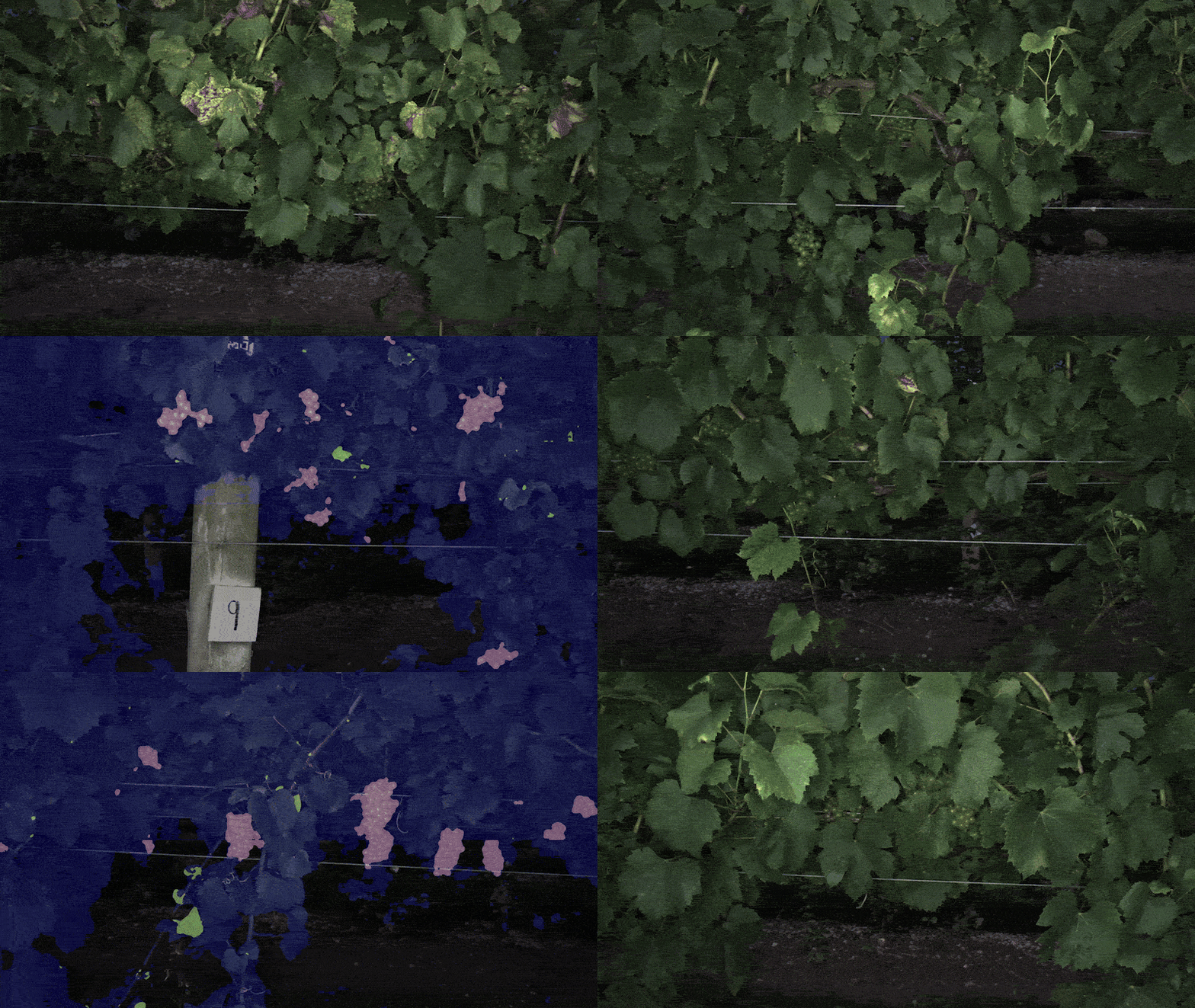
Emma helps the vineyard increase their yield. She scans every vine and flags problems as they arise. Capturing this data helps understand canopy development, structural gaps, and nutritional status to guide sprays, fertigation, and replanting. Earlier detection of pests and diseases reduces crop loss and unnecessary sprays, and helps isolate infected areas for management.
A detailed report and action plan are generated for the farmer, including heatmaps of issue spread, tagged locations of the incidents, crop estimates, and suggested actions.

Having the ability to reconstruct dynamic environments and keep track of changes is invaluable for our customers. Supermarket managers who use Cactus, our spatial AI platform for retail, can monitor how the store changes between the captures done by the robot and have the AI look for patterns. Empty shelves mean lost profit, but the reasons a shelf is left empty can vary a lot. Having access to such spatio-temporal data helps them predict and optimize per-shelf output of the store.
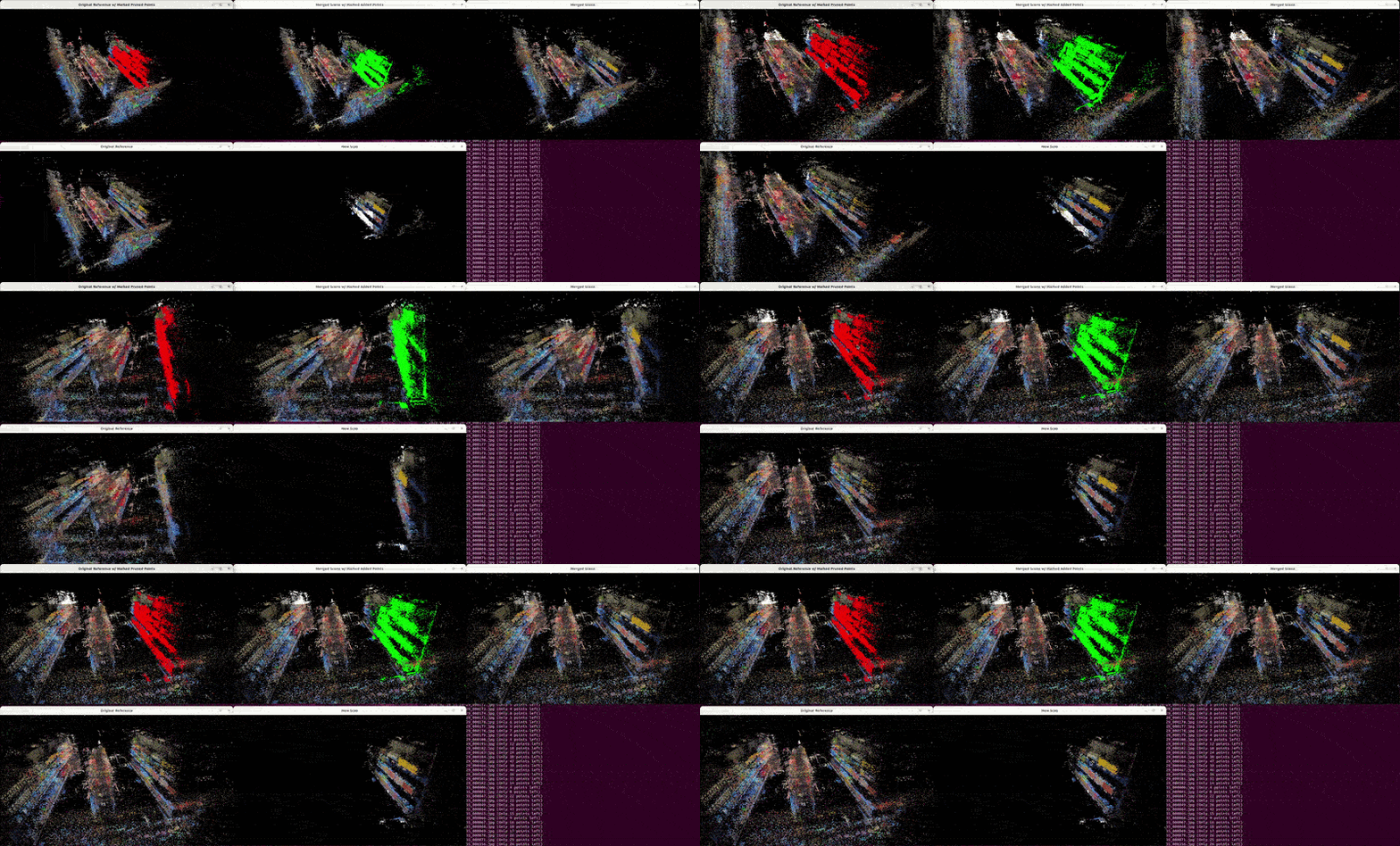
Budbreak is working in no less dynamic environment. Vineyards go through constant change throughout the year but there are a lot of patterns that they follow. Vines grow following patterns and knowing those patterns can help predict and optimize the output. Same goes for the diseases which if detected, contained, and treated early on can save big losses. Experienced farmers build up intuition of these but they've lacked data. With the data collected by Emma farmers can follow how each vine has been growing and use AI to help scale up monitoring of the vineyard to a level that was humanly impossible before.
Auki can help browse and navigate this data better. Creating 3D photorealistic renders of the current state of the vineyard will allow the farmers to better understand where each issue or suggestion is located and help them tag certain actions for Emma for her next scan.
And when it’s time to head into the field, the Gotu app provides AR navigation via smartphone. Farmers no longer have to hunt for a specific infected vine; Gotu guides them along optimized routes directly to the tagged incident.
[Gotu vineyard video comming soon]
Aukiはポーズメッシュという地球上、そしてその先の1000億の人々、デバイス、AIのための分散型機械認識ネットワークを構築しています。ポーズメッシュは、機械やAIが物理的世界を理解するために使用可能な、外部的かつ協調的な空間感覚です。
私たちの使命は、人々の相互認知能力、つまり私たちが互いに、そしてAIとともに考え、経験し、問題を解決する能力を向上させることです。人間の能力を拡大させる最も良い方法は、他者と協力することです。私たちは、意識を拡張するテクノロジーを構築し、コミュニケーションの摩擦を減らし、心の橋渡しをします。
ポーズメッシュは、分散型で、ブロックチェーンベースの空間コンピューティングネットワークを動かすオープンソースのプロトコルです。
ポーズメッシュは、空間コンピューティングが協調的でプライバシーを保護する未来をもたらすよう設計されています。いかなる組織の監視能力も制限し、空間のプライベートな地図の自己所有権を奨励します。
分散化はまた、特に低レイテンシが重要な共同ARセッションにおいて、競争優位性を有します。ポスメッシュは分散化運動の次のステップであり、成長するテック大手のパワーに対抗するものです。
アウキ・ラボはポスメッシュにより、ポーズメッシュのソフトウェア・インフラの開発を託されました。